
6·
2 days agoYou go in, and you take it out,
I would simply win the war and put the uranium in a sack
You go in, and you take it out,
I would simply win the war and put the uranium in a sack
It feels like it should be illegal for Germany to forget why they lost
I wonder what is the point of doing it in Iraq when Saudi Arabia is like 50-100km away?
Is it an insurance policy against SA closing their airspace to operations?
Me during sprint review: maybe some carry over from last week but I’m sure it will be finished by the end of this sprint.
The issue with any feminist critique or any other critique of anti-imperialist critical support of an authoritarian state is that the state itself is the battleground on which these struggles take place.
Iran has a gender equality problem. A big gender equality problem. Probably it has other big problems too that make supporting it uncomfortable. It is entirely correct to oppose any regime that is regressive towards any group. It is entirely correct to criticize Iran’s attitude towards women’s rights and Iran’s attitude towards feminism.
And it’s too much of a hand-wave to simply say that anti-imperialism comes first. It’s not correct to create a hierarchy of justice and say that justice against imperialism is more important and overrides justice for women in Iran.
But the state is the vehicle, battleground, for achieving justice for women’s right, or any other rights. The state is the level at which those rights are fought over. It is at the level of the state that public policy is formed and enforced, at which legal rights for women and at which punishment for oppressors of women occurs, so it’s at the level of the state that the battle for legal rights must occur.
Anti-imperialism is not more important than feminism, but it is a prerequisite for feminism.
If the state is destroyed or subjugated then the fight for feminism or any other rights within that state cannot occur. If the state disintegrates into local factions then the fight for feminism also disintegrates into a more local affair. If the state is subjugated by another state then the rights of women in the subjugated state are now at the whim of the occupier. If it doesn’t serve the interests of the occupier to promote feminist rights in the occupied state, then those rights cannot move forward.
Or, if the occupier is not outright opposed to feminism, it may allow feminist rights to progress but only ever insofar as that struggle doesn’t compromise the interests of the occupier. And necessarily shaped towards the interests of the occupier.
Anti-imperialism is not more important than feminism or any other progressive issue. It is, however, the prerequisite. The state must exist and the state must have sovereignty for any local rights to progress.
It’s conceivable that sometimes a state is so regressive that its destruction is a necessary prerequisite to the struggle for minority rights. Like, it’s hard to imagine the rights of Jewish people progressing under Nazi Germany so the destruction of Nazi Germany as a state was the prerequisite for racial/ethnic justice to develop in Germany. So it’s not an absolute to say that the only way to progress feminism is to maintain the state as the battleground of rights.
But that’s a question of material reality. Is Iran so horrid that women’s rights simply cannot progress? It’s not. Women’s rights have progressed there. They are still far behind where they should be, no doubt, still far behind what is normal in the west. But it’s not incapable of change and evolution. So it’s very difficult to say that the struggle for feminism requires the destruction of Iran as a state.
And if you want to argue that feminism would progress under a US occupation then material reality matters again. Would feminism progress under a US occupation? Did feminism progress in Afghanistan? Iraq? Does it progress better in Saudi Arabia than Iran?
Feminism is just as important as anti-imperialism and anti-imperialism does not override feminism. It’s one struggle. The preservation of a sovereign state that is capable of evolving its treatment of women is the prerequisite for the progression of feminism in Iran.
Occupation of Iran or a puppet regime would not progress feminism there and would be counterproductive because it would sideline or, even worse, co-opt the local struggle for feminism in favor of the interests of the occupier.
It’s one struggle. Feminism requires anti-imperialism. It isn’t subordinated to it. Iranian women can only advocate their rights if the state they live in is capable of responding to their demands which necessarily means that for Iranian feminism to succeed then Iran must be a sovereign state.
If the USA really was the army of progressive liberation then yeah sure the USA would be justified in erasing authoritarian and regressive regimes and establishing in their place progressive regimes. If the USSR didn’t stop at Berlin and replaced Europe with sovereign Soviet republics you couldn’t criticize it. But that’s not what the USA is and that’s not what it would create in Iran.
When an imperialist subjugates another state it doesn’t promote internal rights. It promotes internal division. It empowers whoever is most willing to serve their interests. The rights of feminism are, at best, a tangential inconvenience. Iranian women would be incapable of advocating their rights in a subjugated Iran because they would have zero power over the USA.
Price signal theorists please explain why an efficient market would do that
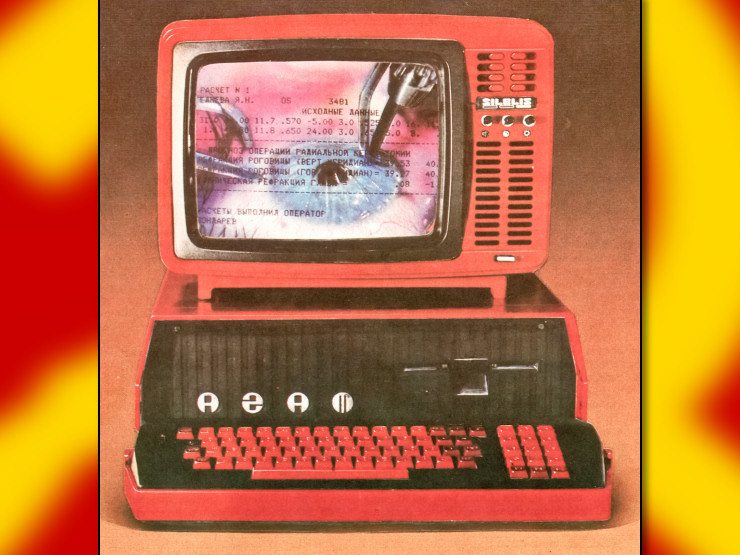
It’s honestly impressive how fucking bad that thing is
There was no damage done to the three Destroyers, but great damage done to the Iranian attackers. They were completely destroyed
Weird to retreat under these conditions
A defensive action? Does this mean Bahraini wine can be called champagne now or what?
Trump’s abrupt U-turn on a plan to reopen the Strait of Hormuz came after backlash from allies
Saudi Arabia, a key Gulf ally, suspended the U.S. military’s ability to use its bases and airspace to carry out the operation, sources say.
The source said Saudi Arabia was “very supportive of the diplomatic efforts” by Pakistan to broker a deal between Iran and the U.S. to end the war.
Straight facts.
It’s weird he appeals to Russian intelligence on the matter. He could simply point at the history books.
Even Wikipedia just straight up acknowledges it
Very soon after the program started, due to the emergence of the Cold War, the western powers and the United States in particular began to lose interest in the program, somewhat mirroring the Reverse Course in American-occupied Japan. Denazification was carried out in an increasingly lenient and lukewarm way until being officially abolished in 1951. The American government soon came to view the program as ineffective and counterproductive. Additionally, the program was highly unpopular in West Germany, where many Nazis maintained positions of power. Denazification was opposed by the new West German government of Konrad Adenauer,[2] who declared that ending the process was necessary for West German rearmament.[3]
It’s not a secret in any sense and there was no coverup.
Hitlers final days were spent hoping for a sudden policy shift from the western allies to ally with nazi germany to fight the USSR. Hitler is often mocked as delusional for this but 
Germany also didn’t de-kaiserreich either. Note how many powerful Germans still use the honorific “von” in their names, pointing to their status as nobility. In Austria they made the use of “von” illegal.
Edit: to be very clear, it’s an early draft
It’s still an early draft.
You can view it as the proposed successor to IPv6, but really it’s more of an extension to IPv4.
Put simply, IPv6 is beginning to be seen as a failure, so IPv8 looks at why IPv6 adoption is still so poor and proposes something else.
IPv8 is backwards compatible with IPv4 (IPv4 becomes a subset of IPv8) which should help adoption since there’s no grand switch-over day like IPv6 requires.
But it also includes a bunch of other stuff, including the idea that every single network element has an identity. So, like, your router can identify itself in a verifiable manner to your ISP by using a JWT.
This allows some good things, for example right now it’s a flaw in the internet that you often have to simply trust an IP address for important data. Like a router can advertise routes and currently your home network trusts your ISP for routes because somewhere in your router there is a static IP assigned and your home router will just trust that IP…. Stuff like this which leaves a lot of infra open to attack such as spoofing or man in the middle stuff.
In IPv8 your router can now verify the identity of who is actually talking to it. This is good, but the downside is that it makes it much more difficult to be anonymous since traffic is now deeply identifiable.
It also allows for every single network element to be uniquely addressable. Under IPv4, typically there is port mapping so the public internet sees “you” as your ISP, but under IPv8 it’s proposed to make every single network element directly addressable by IP, identity, and DNS8. This also enables cool things like potentially you could have asynchronous communication without needing to keep a socket open and dealing with port exhaustion but it also means you’re much less anonymous than under IPv4.
It’s probably moot anyway since these days your ISP and every server / router in the middle is maintaining detailed access logs anyway so your anonymity is already gone, but it makes it much simpler to deanonymize and potentially even undermines stuff like using a VPN by creating many more vectors by which a VPN can leak identity.
You laughed at me for buying a Tesla, but who’s laughing now! I’m already getting the bus.
The memorial is to be held at the 4 Seasons
IPv8 proposals end up making anonymity pretty difficult.
And there are under-development systems to provide a method of your carrier disclosing information about you, so like your network packets would get some kind of tag added to them that can be used to query your rough location, age, and potentially other stuff like payment processing. Right now it’s opt-in, eg “do you want to verify you’re 18?”, but that will change as soon as it’s widespread.
The mandated backdoor built for law enforcement became the adversary’s front door.
Wow just like every expert and half-expert and non-expert who just thought about it for a second predicted. Wow.
We’re all doing blockades now
Note - Maybe I should have made some kind of summary post to survey Q1 economic results? I didn’t initially intend to look at each major EU economy but I started following that rabbit hole… Would that be interesting to you folk?
Spain grows 0.6% in Q1 which is actually pretty good, considering the EU economic climate.
Obviously we can conclude that opposing genocide in Palestine and investing in renewables is good for the economy.
Gross Domestic Product (GDP) in volume terms rose by 0.6% in the first quarter compared with the previous quarter. This rate was one tenth lower than that of the fourth quarter of 2024.
Domestic demand contributed 0.4 points to quarter-on-quarter GDP growth. On the other hand, external demand contributed 0.2 points.
By demand aggregates, household final consumption expenditure rose by 0.4% and that of Public Administrations by 0.2%. On the other hand, gross fixed capital formation recorded a variation of 0.6%.
Exports of goods and services recorded a quarter-on-quarter rate of 1.0%, nine tenths higher than the fourth quarter. Meanwhile, imports showed a variation of 0.7%, six tenths less compared to the previous quarter.
On the supply side, all major economic sectors showed positive rates in their added value. Thus, industrial branches rose by 1.1% quarter-on-quarter. Within these, the manufacturing industry increased its rate by three tenths to 0.8%.
The gross value added of Construction grew by 0.4% quarter-on-quarter, 2.2 points less than in the previous quarter. And the Services gross value added rate moderated by six tenths to 0.3%.
France24 / DW - German growth beats forecast but energy shock looms
Output in Europe’s biggest economy rose 0.3 percent from January to March compared to the previous quarter, according to provisional data from statistics agency Destatis.
Analysts surveyed by financial data firm FactSet had forecast growth of 0.2 percent. The data covered just the first month of the US-Israeli war against Iran, which began at the end of February.
The expansion was driven by growth in exports as well as higher consumer and government spending, Destatis said.
Sebastian Wanke, an economist at German public lender KfW, said it was a “surprisingly strong start to the year”, particularly given the global geopolitical turmoil.
“But the war in Iran is now casting a shadow over the outlook,” he added.
Growth for the fourth quarter of 2025 was however revised down to 0.2 percent, from 0.3 percent previously.
The export-driven German economy has struggled in recent years due to a manufacturing slump, high energy costs, and fierce competition, in particular from China.
It eked out meagre growth in 2025 following two straight years of recession.
Hopes had been high for a strong rebound this year driven by a public spending blitz and reforms pushed by Chancellor Friedrich Merz, but the Iran war has dimmed those expectations.
The government last week halved its growth forecast for 2026, and now expects gross domestic product to expand just 0.5 percent in 2026.
OilPrice - $7 Billion In Perfectly Timed Oil Bets Sparks Insider Trading Fears