Yes, but you would agree that the gods are social constructs? And that in the same way that money affects the world, the gods affect the world. Deus ordered the Crusaders to ransack the Holy Land, for example. Now, you can say it was just the followers deciding on all of this, and the social construct of Deus had no agency. But the same is equally true of money, so Deus is as real as money is. Of course, I use Deus as an example of a well known god for convenience, I am no Christian.
The Pope ordered the crusades, not a deity. In the same way, organized religions are social constructs, not the characters they’re based on. I don’t think anyone would argue that religions aren’t real, it’s just that the claims they make are untrue.
That’s a double standard. Money is to gods as capitalism is to religion. You said money is real, you didn’t specify that money is fake and only capitalism is real. But now you’re saying gods are fake and only religions are real. You said money has effects on the world despite being a mere idea, but now you’re saying Deus can’t have effects on the world because She’s a mere idea.
Your beliefs aren’t consistent, you didn’t think this all the way through. Fortunately, My goal with this gotcha is to encourage you towards deeper reflection, not to dismiss you. I will be satisfied with your logical consistency if you either say that money isn’t real, or that gods are real.
Ok, I kinda see where you’re coming from. However, I think there’s still a difference. The system is what gives “legitimacy” (for lack of a better word) to a social construct. So a god is not real to people without the religion, just as money as a concept wouldn’t be real to people living outside of capitalism. The problem for this analogy is that outside of a few uncontacted tribes, capitalism is inescapable for virtually everyone on earth. Even “communist” countries rely on the global capitalist market to some extent at this point in history. So money is more real to more people if that makes sense.
Elohim once promised the Holy Land to the Hebrews. The Zionists in Israel believe they have a divine blessing to commit their genocide and settle Palestine. I have a theological rebuttal to that mindset, but because I am only using Zionists as an example, I will not use it today.
You say we can’t escape capitalism. I agree. I assert that Palestinians cannot escape Judaism, regardless of their own beliefs. Thus, religion can be very much like capitalism, and gods can be inescapable even to those who do not believe.
That is not a valid counterexample. I repeat, no one here is arguing that religions or political philosophies aren’t real or that they don’t have tangible effects. The fact that the religion exists does not make the fictional characters in it real to those outside the religion.
If that’s so, then why does capitalism make money real to you? I don’t believe money is real. Though I still do often believe in it without believing it’s real, just for convenience’s sake.
Because I am forced to operate within capitalism. I work to earn money, and I exchange it for goods and services daily. I don’t like capitalism, to be clear, but that doesn’t mean I don’t live in it.
Now you’re the one not being consistent, what do you mean by “believing in it without believing it’s real”?
You don’t need to pester about it. You’re doing this logic trick to show how epistemic difference between spirituality and materialism have ontological similarity. You are correct BTW, to point out the similarities between money and god, church and capital.
But in demanding “logical consistency” you’ve turned a teaching exercise into a debate. The standard that you set that the person be “logically consistent” is part of the ontology that lumps yours and rarWars comments together. By adopting the post - enlightenment ideal of rational, logical consistency as a means to invalidate your opponent’s position, you are performing an act of hegemony.
Contradiction also has consistent logic to it. The way contradiction appears within the individual subject is mysterious, but it drives a lot of activity, both constructive and destructive.
I think you have a good criticism of rational atheism, but the content of these comments aren’t practical or pedagogical, which I believe harms your argument. I think your perspective is pretty good but you got lost in the bit
I agree with your logic and points of emphasis. I can’t make any more presumptions based on these few paragraphs.
I think there are times in a discussion where it can veer into many different directions. I’m very practical minded when it comes to criticism and analysis. It is a good discussion. Sorry if I came off lecturey I think I just felt like writing something lol
Paulo Freire, Brazilian philosopher and educator, proposed an educational method for adults based on what he called “the problem posing method.” This method was based on dialogue that he deemed necessary for education and was not oppressive and controlling. Freire argued that traditional educational methods were inherently oppressive because they served the interest of the elite, instituted what he called “the banking method” in hopes to turn people into better workers. In contrast to this, Freire advocated for an education that was liberating and required dialogue. Dialogue, however, could only take place with profound love.
“Profound love” is an interesting phrase to find in any materialist method, especially with what we imagine or maybe have experienced regarding education. Our society has trouble accounting for it because of how we determine what counts as material or objective fact (this is our ontology). Love, to the rational materialist, appears as chemicals induced to stimulate biological processes. The body is a machine that produces love-like social behaviors, love is just a bunch of chemicals, and so on.
Friere’s method treats love as a subject/object relation, in both the subjective inner working of the individual (I love someone), the way the individual’s actions reflect their inner experience (I love someone, so I act like I love them), and how that practical activity changes the outside world (I experience love from loving someone). He uses a process of positive and negative statements to concretely define love, like “loving is a desire to liberate an other, not a desire to enslave them.” And at the end of his process, establishes “love” as an objectively revolutionary subject.
I am more and more convinced that true revolutionaries must perceive the revolution, because of its creative and liberating nature, as an act of love. For me, the revolution, which is not possible without a theory of revolution—and therefore science—is not irreconcilable with love. On the contrary: the revolution is made by people to achieve their humanization. What, indeed, is the deeper motive which moves individuals to become revolutionaries, but the dehumanization of people? The distortion imposed on the word “love” by the capitalist world cannot prevent the revolution from being essentially loving in character, nor can it prevent the revolutionaries from affirming their love of life. Guevara (while admitting the “risk of seeming ridiculous”) was not afraid to affirm it: “Let me say, with the risk of appearing ridiculous, that the true revolutionary is guided by strong feelings of love. It is impossible to think of an authentic revolutionary without this quality.”
So for him, the teacher/student dialectic is founded in revolutionary science. Educational dialog is liberating, and the act of self-education is the practice of self- liberation. None of these ideas are unfounded in the Marxist tradition, in fact they’re a direct application of Marxist revolutionary theory. After all, “The philosophers have only interpreted the world, in various ways, the point is to change it.”
And the basis for Friere’s pedagogy, is asking questions and posing problems, through a teacher/student dialectical pedagogy used as a practical means to free ourselves and others. Without it, as Friere once described it, “When education isnt liberating it is the dream of the oppressed to become the oppressor.” This is what makes “winning the debate” a subconscious act of hegemony and subjugation. Even if it isnt our intent to carry out acts like this, the social structure (superstructure) that exists perpetuates itself through these actions.
So in order to educate an other we have to be actively trying to educate ourselves, because educating ourselves is a means to liberate ourselves, but is only possible when we commit ourselves to liberating an other. In doing this, the other also takes on the role of teacher and student, becoming preoccupied with liberation through education of the self and others.
Anyway, as someone who reasons in a similar way as you, I’ve found the book to be very helpful and enlightening. Its kind of a difficult read, but I’m into that I guess
No. Rules based on gods are social constructs.
The gods themselves were never constructed and do not exist.
Deus is not as real as money is. I can touch money, I can exchange money for goods and services.
I cannot touch or interact with Deus, only the rules it’s devotees impose on me.
You can’t touch money. You can touch a physical representation of money. Bills and coins are as much money as a wooden statuette of a man being crucified is Jesus. You can’t touch the numbers in your bank account.


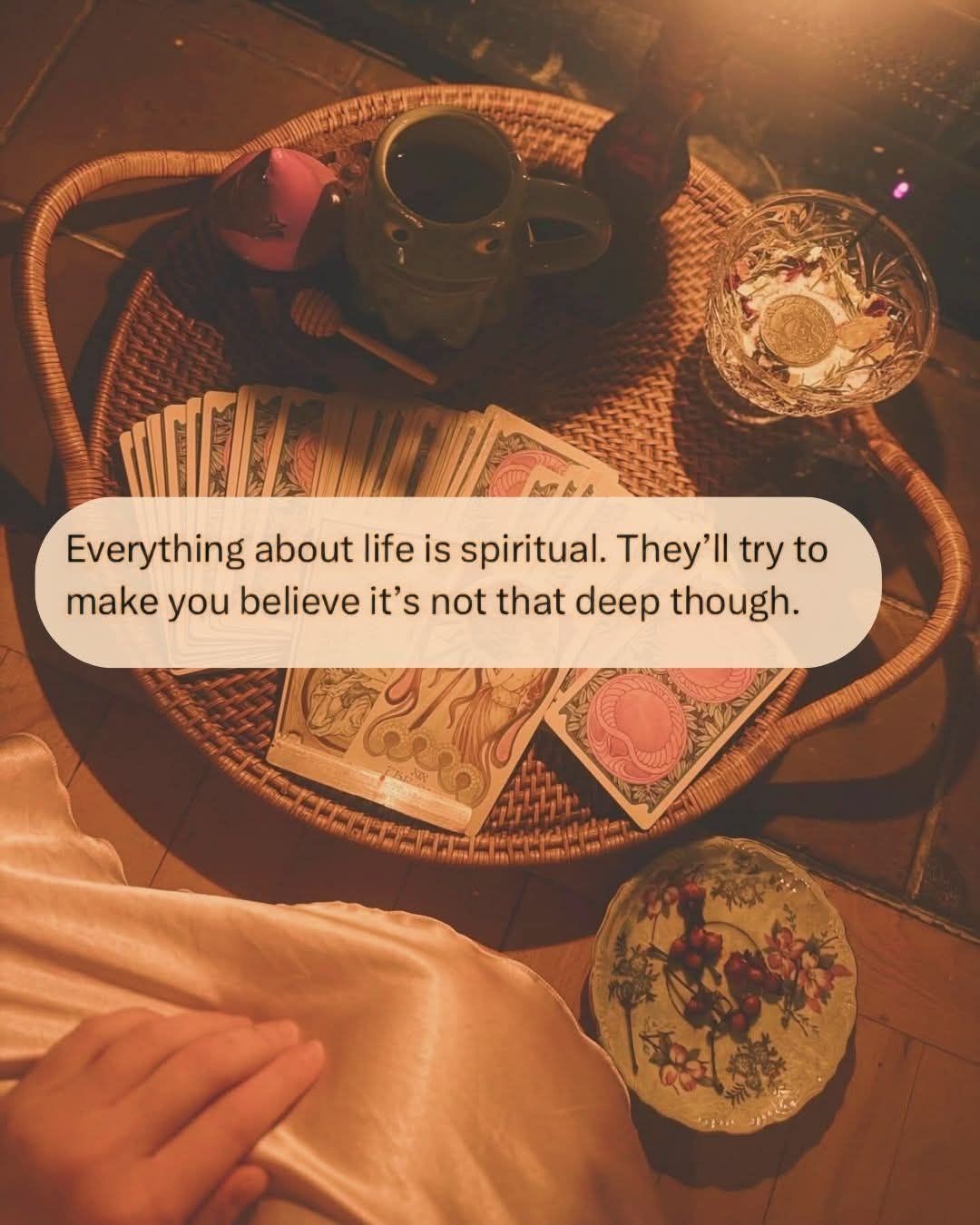
That’s not the gotcha you think it is. Spiritual woo and real-life social constructs are two totally different things.
Yes, but you would agree that the gods are social constructs? And that in the same way that money affects the world, the gods affect the world. Deus ordered the Crusaders to ransack the Holy Land, for example. Now, you can say it was just the followers deciding on all of this, and the social construct of Deus had no agency. But the same is equally true of money, so Deus is as real as money is. Of course, I use Deus as an example of a well known god for convenience, I am no Christian.
The Pope ordered the crusades, not a deity. In the same way, organized religions are social constructs, not the characters they’re based on. I don’t think anyone would argue that religions aren’t real, it’s just that the claims they make are untrue.
That’s a double standard. Money is to gods as capitalism is to religion. You said money is real, you didn’t specify that money is fake and only capitalism is real. But now you’re saying gods are fake and only religions are real. You said money has effects on the world despite being a mere idea, but now you’re saying Deus can’t have effects on the world because She’s a mere idea.
Your beliefs aren’t consistent, you didn’t think this all the way through. Fortunately, My goal with this gotcha is to encourage you towards deeper reflection, not to dismiss you. I will be satisfied with your logical consistency if you either say that money isn’t real, or that gods are real.
Ok, I kinda see where you’re coming from. However, I think there’s still a difference. The system is what gives “legitimacy” (for lack of a better word) to a social construct. So a god is not real to people without the religion, just as money as a concept wouldn’t be real to people living outside of capitalism. The problem for this analogy is that outside of a few uncontacted tribes, capitalism is inescapable for virtually everyone on earth. Even “communist” countries rely on the global capitalist market to some extent at this point in history. So money is more real to more people if that makes sense.
Elohim once promised the Holy Land to the Hebrews. The Zionists in Israel believe they have a divine blessing to commit their genocide and settle Palestine. I have a theological rebuttal to that mindset, but because I am only using Zionists as an example, I will not use it today.
You say we can’t escape capitalism. I agree. I assert that Palestinians cannot escape Judaism, regardless of their own beliefs. Thus, religion can be very much like capitalism, and gods can be inescapable even to those who do not believe.
That is not a valid counterexample. I repeat, no one here is arguing that religions or political philosophies aren’t real or that they don’t have tangible effects. The fact that the religion exists does not make the fictional characters in it real to those outside the religion.
If that’s so, then why does capitalism make money real to you? I don’t believe money is real. Though I still do often believe in it without believing it’s real, just for convenience’s sake.
Because I am forced to operate within capitalism. I work to earn money, and I exchange it for goods and services daily. I don’t like capitalism, to be clear, but that doesn’t mean I don’t live in it.
Now you’re the one not being consistent, what do you mean by “believing in it without believing it’s real”?
You don’t need to pester about it. You’re doing this logic trick to show how epistemic difference between spirituality and materialism have ontological similarity. You are correct BTW, to point out the similarities between money and god, church and capital.
But in demanding “logical consistency” you’ve turned a teaching exercise into a debate. The standard that you set that the person be “logically consistent” is part of the ontology that lumps yours and rarWars comments together. By adopting the post - enlightenment ideal of rational, logical consistency as a means to invalidate your opponent’s position, you are performing an act of hegemony.
Contradiction also has consistent logic to it. The way contradiction appears within the individual subject is mysterious, but it drives a lot of activity, both constructive and destructive.
I think you have a good criticism of rational atheism, but the content of these comments aren’t practical or pedagogical, which I believe harms your argument. I think your perspective is pretty good but you got lost in the bit
Your criticisms are likely valid. How can I do better?
I think youre doing well.
I agree with your logic and points of emphasis. I can’t make any more presumptions based on these few paragraphs.
I think there are times in a discussion where it can veer into many different directions. I’m very practical minded when it comes to criticism and analysis. It is a good discussion. Sorry if I came off lecturey I think I just felt like writing something lol
Ever read Pedagogy of the Oppressed?
Thanks! No, tell Me more
From this article
“Profound love” is an interesting phrase to find in any materialist method, especially with what we imagine or maybe have experienced regarding education. Our society has trouble accounting for it because of how we determine what counts as material or objective fact (this is our ontology). Love, to the rational materialist, appears as chemicals induced to stimulate biological processes. The body is a machine that produces love-like social behaviors, love is just a bunch of chemicals, and so on.
Friere’s method treats love as a subject/object relation, in both the subjective inner working of the individual (I love someone), the way the individual’s actions reflect their inner experience (I love someone, so I act like I love them), and how that practical activity changes the outside world (I experience love from loving someone). He uses a process of positive and negative statements to concretely define love, like “loving is a desire to liberate an other, not a desire to enslave them.” And at the end of his process, establishes “love” as an objectively revolutionary subject.
He writes about Che Guevara in the notes:
So for him, the teacher/student dialectic is founded in revolutionary science. Educational dialog is liberating, and the act of self-education is the practice of self- liberation. None of these ideas are unfounded in the Marxist tradition, in fact they’re a direct application of Marxist revolutionary theory. After all, “The philosophers have only interpreted the world, in various ways, the point is to change it.”
And the basis for Friere’s pedagogy, is asking questions and posing problems, through a teacher/student dialectical pedagogy used as a practical means to free ourselves and others. Without it, as Friere once described it, “When education isnt liberating it is the dream of the oppressed to become the oppressor.” This is what makes “winning the debate” a subconscious act of hegemony and subjugation. Even if it isnt our intent to carry out acts like this, the social structure (superstructure) that exists perpetuates itself through these actions.
So in order to educate an other we have to be actively trying to educate ourselves, because educating ourselves is a means to liberate ourselves, but is only possible when we commit ourselves to liberating an other. In doing this, the other also takes on the role of teacher and student, becoming preoccupied with liberation through education of the self and others.
Anyway, as someone who reasons in a similar way as you, I’ve found the book to be very helpful and enlightening. Its kind of a difficult read, but I’m into that I guess
No. Rules based on gods are social constructs.
The gods themselves were never constructed and do not exist.
Deus is not as real as money is. I can touch money, I can exchange money for goods and services.
I cannot touch or interact with Deus, only the rules it’s devotees impose on me.
You can’t touch money. You can touch a physical representation of money. Bills and coins are as much money as a wooden statuette of a man being crucified is Jesus. You can’t touch the numbers in your bank account.